Ride Horses Via the Cradle of Nomadic Civilization
Included In-Country Services
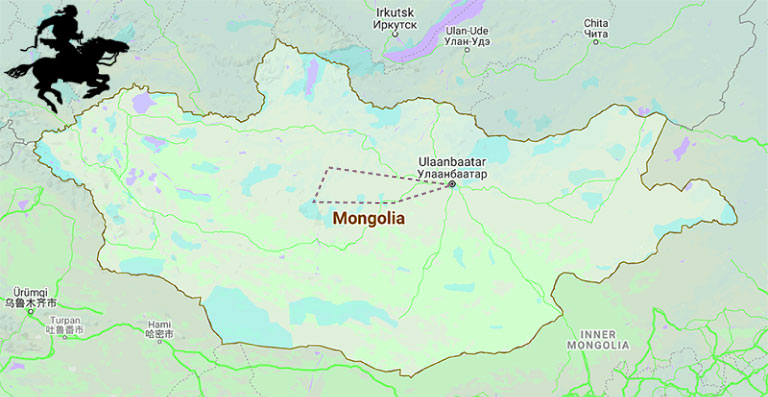
Ride Horses Across Central Mongolia
The Khangai Mountain range in Central Mongolia is drained by some of Mongolia’s mightiest Rivers – incredible landscapes to ride horses! The Orkhon is the most famous of them. For tens of thousands of years the Orkhon and it’s tributaries gave water and shelter to the nomadic peoples and their animals. Until today their lifestyle has changed little and they still ride horses to herd their sheep and yaks, to protect them against the misfortune of the harsh weather and wolves.
Local horsemen will accompany you and take you to their homeland, teaching you about their secrets of survival. Our staff will set up the overnight camps, which will be both adequate and comfortable. There will be good food, prepared by a professional cook, a dining tent to shelter you from the sun and give you warmth at night, comfortable sleeping tents, a shower tent and a toilet tent. Vehicles will accompany the journey as an option for those who do not want to ride the entire distance.
Arrival in Ulaanbaatar
Sightseeing and Welcoming Dinner
You will be met at the airport and transferred to your 4-star hotel. After lunch at the hotel, there will be sightseeing in Ulaanbaatar, including the National History Museum and the Bogd Khan Palace, a series of beautiful traditional buildings where the last religious King of Mongolia resided. The Palace is now a museum displaying fascinating artifacts and costumes associated with the king, as well as his collection of European furniture and stuffed animals. There will be a welcome dinner at a local restaurant, before heading back to the hotel for the night.
Karakorum
Today, you will travel overland to the ancient capital of Mongolia, Karakorum. For 30 years the ancient capital of the Mongoila Empire under Genghis Khan, the largest empire the world has ever seen. At it’s height in 1279 it covered nearly all of Asia and Europe (his grandson Kublai Khan moved the capital to Beijing). This area is part of A UNDESCO World Heritage site. There is little left of the former capital these days, but the walls of the massive Erdenezuu Monastery, built in 1586, still stand. Other temples suffered damage under communist purges of the 20th century, as they attempted to eradicate the 60 temples that housed nearly 10,000 Buddhist monks. Afternoon, we a visit to the Erdene Zuu Monastery which is the most ancient surviving Buddhist monastery in Mongolia. It is in Ovorkhangai Province, near the town of Kharkorin and adjacent to the ancient city of Karakorin. It is part of the World Heritage Site entitled Orkhon Valley Cultural Landscape. After visiting Karakorum Museum continue drive to Orkhon Valley reach to Nariin Am and meet the local horseman tonight
Orkhon Valley
After breakfast, riders will be matched with their horses and saddles will be selected — then the horseback adventure begins. Inscribed as a UNESCO World Heritage Site, the Orkhon Valley Cultural Landscape is home to numerous historical sites from ancient nomadic empires. The valley is perfect for horseback riding, which is a central part of Mongolian culture. Riding alongside a nomadic herder to explore the vast open landscapes and follow traditional routes is an enriching experience for both adults and children. Depending on local activities, you may even have the chance to watch a local horseracing event or see herds of horses running free across the steppe.
Tuvkhun Monastery
After breakfast the riders are matches to their horses, saddles selected, and the horse tour begins. Today we will visit the monastery, which is situated at the top of Tuvshin Mountain, and where the first religious King of Mongolia – the Ondor Gegeen Zanabazar – worked and lived. We will continue riding along the river until we reach our overnight camping spot on the river’s shores.
Orkhon Valley, Orkhon Waterfall to Tumurtein Am
Today we will continue to ride to Orkhon Waterfall. The waterfall is situated in the Orkhon Valley. This valley is known as the cradle of Mongolian civilization as many of Mongolia’s ancient monuments lie within its borders. We will camp by the waterfall for the next two nights to singing games – the loser has to consume a whole bowl of ‘airag,’ so beware when visiting local families!
Buureg -Khuis Lake- Shireet lake
Refreshed and relaxing at base camp, we are back on the horses today. When you watch the packhorses being loaded, you will be amazed about how much these small, sturdy horses can carry. Nevertheless, we recommend that you take as little as possible with you on this part of the trip. The riding becomes more challenging as we will ride through more obstacle areas and narrow trails of forested mountains into more remoteness altitude of 2200m above sea level. Even though, nature will be pristine and untouched. We will reach our main destination Eight Lakes. Overnight in the tent on the shore of Lake. Following day ride between the beautiful lakes, walk around, watch birds and flowers The Naiman Lake area was formed by volcanic eruption in the late Neogene. You still can see lava rocks in the flat area and barren mountain tops. then ride back where the Nomad family lives, farewell dinner with horseman and meet the support vehicles.
Drive to Khugnu Khan
After leisurely breakfast drive to Khugnu Khan by Erdene Khamba Monastery is located only 18 km north of Elsen Tasarhai, at the Khogno Khan Uul Mountains (1967 m ASL.) Today there are only the ruins. Erdene Khamba Monastery had two sections: the lower one called the Zaluu Khiid, or the “Novice Temple” and the upper one called the Uvgun Khiid, or the “Elder’s Temple”, which was built on top of the mountain. The monastery was built in a sacred valley, according to Mongolian Buddhist traditions.
Tuul Lodge via UB city
After an early breakfast, drive along a beautiful country road back through Ulaanbaatar and visit a museum devoted to the Morin Khuur — also known as the horsehead fiddle, Mongolia’s national instrument — to see a unique collection of these instruments and enjoy a performance by Morin Khuur master. Then drive to Tuul Riverside Lodge in Maikhan Tolgoi. An intimate and fully sustainable traditional Mongolian ger camp on the foot of the Bayanzurkh Mountain, the beautiful camp’s surrounding invites to be explored and discovered! Your gers are prepared by a dedicated team of people, giving you a warm welcome! Please feel free to channel your inner discoverer and explore the beautiful surroundings of our camp! We hope to give you an insight of Mongolia’s captivating culture through various activities!
Full Day at the Lodge.
Enjoy the mini cooking lesson in the morning! Mongolian traditional cooking has been enriched with cooking traditions of many other nations which is tracked with history of 800 years ago, the time of conquest. This led to rapid culture exchange. We will cook today „buuz “, which is cooked on special occasions and shall be fun for the kids to prepare. After lunch try assembling mini ger. The Mongolian Ger is a simple structure to set up. Setting up the yurt is all about balance, patience, tension, and symmetry. Highly recommend doing the entirety of the setup process or at least take part. We will also have the chance to try Mongolian bows and arrows ourselves! Legendary for their prowess with the bow, the Mongols perfected this ancient skill using bows crafted from wood, animal sinew, bone, and glue made from fish bladders — a process that could take up to a year. A stone inscription from the 13th century even claims that one of Genghis Khan’s generals hit a target from a distance of one-third of a mile! In the evening dine a traditional Mongolian barbecue food, known as Khorhog – our family’s favorite Mongolian dish by the way – demonstrating what an important ingredient stones can be: mutton will be cooked slowly in a huge, metal urn with vegetables, water,and most importantly hot stones from the flame. The meat becomes soft and tasty, and the water turns into a thick meaty broth… Quite a few Mongolian chefs affirm that they can taste the difference between river and lake stones. The day shall finish with a camp ‘s bon-fire and star gazing … Unforgettable on a clear night.
After a relaxed breakfast, you will be transferred to the airport and depart back home. Thank you very much for travelling with us! We hope to see you again.
NRT-001: 15 – 27 May 2026
NRT-003: 3 – 15 Jun 2026
NRT-011: 29 Aug – 10 Sep 2026
Per Person Rates for 2026
2-3 pax USD 3,539.00
4-5 pax USD 3,379.00
6-9 pax USD 3,089.00
9+ pax USD 2,629.00
Single Supplement USD 250.00
Please contact us for prices and departure dates
Transportation within Mongolia, twin accommodation in a 4-star hotel. Single accommodation can be arranged at an additional cost. Tented accommodation while on a trek, three meals a day, English-speaking guide, transfers, camel or horse hire where specified, support staff including drivers, horse /camel men, and camp assistants.
International transportation, travel insurance, visas, departure tax, alcoholic drinks, gratuities, items of a personal nature.It is the responsibility of the client to be fully covered with travel and medical insurance while traveling in Mongolia.
Upon request, a single supplement in the countryside can be provided at the additional cost. In case single accommodation in ger camps was not provided the amount would be calculated based on the missing nights and reimbursed. Nomads cannot be held responsible for over bookings, as long as the company can prove with sufficient documentation that overbooking has been the error of the third party. Should circumstances beyond our control, such as the imposition of quarantine restrictions, any changes of the domestic flight or train schedules, require a change of itinerary, we will inform your agent and propose an equivalent itinerary. Again, Nomads cannot take over the responsibility for the Airlines or the National Train Company. The traveler is responsible for having proper travel documents, such as a valid passport, proper visa, and the necessary passport pictures.
Have a question about this itinerary? Contact us today!
You may also want to have a look at: